Source Code : Exception call back
Java Is Open Source Programming Language You Can Download From Java and Java Libraries From http://www.oracle.com.
Click Here to download
We provide this code related to title for you to solve your developing problem easily. Libraries which is import in this program you can download from http://www.oracle.com.
Click Here or search from google with Libraries Name you get jar file related it
Exception call back
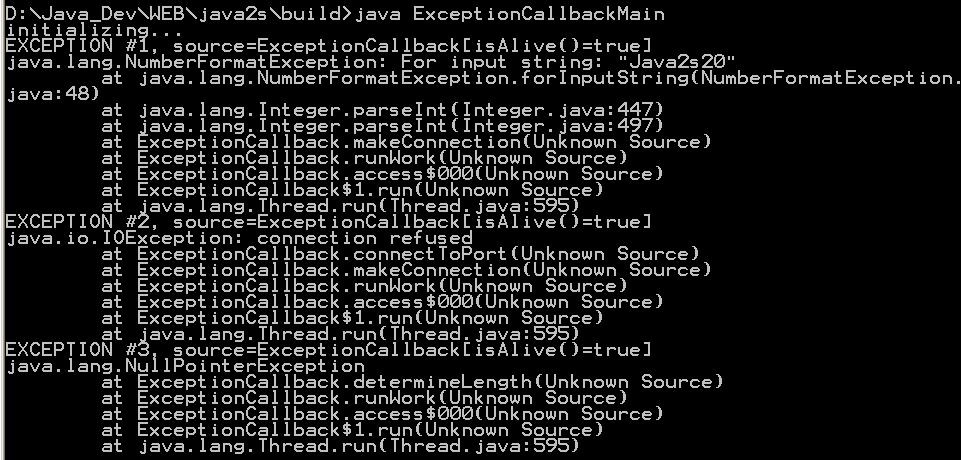
import java.io.IOException;
import java.util.Collections;
import java.util.HashSet;
import java.util.Iterator;
import java.util.Set;

public class ExceptionCallbackMain extends Object implements ExceptionListener {

  private int exceptionCount;

  public ExceptionCallbackMain() {
    exceptionCount = 0;
  }

  public void exceptionOccurred(Exception x, Object source) {
    exceptionCount++;
    System.err.println("EXCEPTION #" + exceptionCount + ", source="
        + source);
    x.printStackTrace();
  }

  public static void main(String[] args) {
    ExceptionListener xListener = new ExceptionCallbackMain();
    ExceptionCallback ec = new ExceptionCallback(xListener);
  }
}

class ExceptionCallback extends Object {
  private Set exceptionListeners;

  private Thread internalThread;

  private volatile boolean noStopRequested;

  public ExceptionCallback(ExceptionListener[] initialGroup) {
    init(initialGroup);
  }

  public ExceptionCallback(ExceptionListener initialListener) {
    ExceptionListener[] group = new ExceptionListener[1];
    group[0] = initialListener;
    init(group);
  }

  public ExceptionCallback() {
    init(null);
  }

  private void init(ExceptionListener[] initialGroup) {
    System.out.println("initializing...");

    exceptionListeners = Collections.synchronizedSet(new HashSet());

    if (initialGroup != null) {
      for (int i = 0; i < initialGroup.length; i++) {
        addExceptionListener(initialGroup[i]);
      }
    }

    noStopRequested = true;

    Runnable r = new Runnable() {
      public void run() {
        try {
          runWork();
        } catch (Exception x) {
          sendException(x);
        }
      }
    };

    internalThread = new Thread(r);
    internalThread.start();
  }

  private void runWork() {
    try {
      makeConnection();
    } catch (IOException x) {
      sendException(x);
    }

    String str = null;
    int len = determineLength(str);
  }

  private void makeConnection() throws IOException {
    String portStr = "Java2s20";
    int port = 0;

    try {
      port = Integer.parseInt(portStr);
    } catch (NumberFormatException x) {
      sendException(x);
      port = 80;
    }

    connectToPort(port);
  }

  private void connectToPort(int portNum) throws IOException {
    throw new IOException("connection refused");
  }

  private int determineLength(String s) {
    return s.length();
  }

  public void stopRequest() {
    noStopRequested = false;
    internalThread.interrupt();
  }

  public boolean isAlive() {
    return internalThread.isAlive();
  }

  private void sendException(Exception x) {
    if (exceptionListeners.size() == 0) {
      x.printStackTrace();
      return;
    }

    synchronized (exceptionListeners) {
      Iterator iter = exceptionListeners.iterator();
      while (iter.hasNext()) {
        ExceptionListener l = (ExceptionListener) iter.next();

        l.exceptionOccurred(x, this);
      }
    }
  }

  public void addExceptionListener(ExceptionListener l) {
    if (l != null) {
      exceptionListeners.add(l);
    }
  }

  public void removeExceptionListener(ExceptionListener l) {
    exceptionListeners.remove(l);
  }

  public String toString() {
    return getClass().getName() + "[isAlive()=" + isAlive() + "]";
  }
}

interface ExceptionListener {
  public void exceptionOccurred(Exception x, Object source);
}
Thank with us